By Mohammed Miah, Gas Safe registered heating engineer
Turning the heating back on in October is a useful chance to check how each room warms up. Start with the controls, let the system warm through, and note any radiators that stay cold. A cold bottom can indicate sludge or restricted circulation; it does not automatically mean you need a new boiler or a system flush.
Start with the controls, then check each room
Choose a time when you can stay at home and observe the heating. Check that the programmer is set for heating, the room thermostat is asking for warmth and radiator valves in the rooms you want to heat are open. Follow your boiler's user instructions rather than changing unfamiliar settings.
- Give the system time to warm through before comparing radiators. Note which rooms reach a comfortable temperature and which remain cool.
- Keep furniture and curtains clear of radiators so they can release heat into the room.
- Look for visible drips around radiator valves and accessible pipework. Record any boiler fault code without removing the casing.
- If your boiler has a pressure gauge, compare its reading with the range in the manufacturer's instructions. Repeated pressure loss needs investigation.
Radiator cold at the bottom: what does it mean?
A radiator that remains hot above a distinctly cold lower section can have debris restricting water flow. Poor circulation is another possible cause, so the temperature pattern is a clue rather than a diagnosis. Worcester Bosch recommends a professional assessment for persistent uneven heating.
Write down whether one radiator or several are affected and whether the rooms still warm up. That information helps an engineer distinguish a local radiator or valve issue from a wider circulation problem. Avoid repeatedly turning the thermostat higher to compensate for a room that never gets warm.
Will bleeding the radiator help?
Bleeding releases trapped air, which typically leaves the top of a radiator cold. It does not remove sludge from the bottom. If the pattern suggests trapped air, follow the radiator and boiler manufacturer's instructions, switch the heating off and let it cool before attempting to bleed it. If you are unsure, ask an engineer.
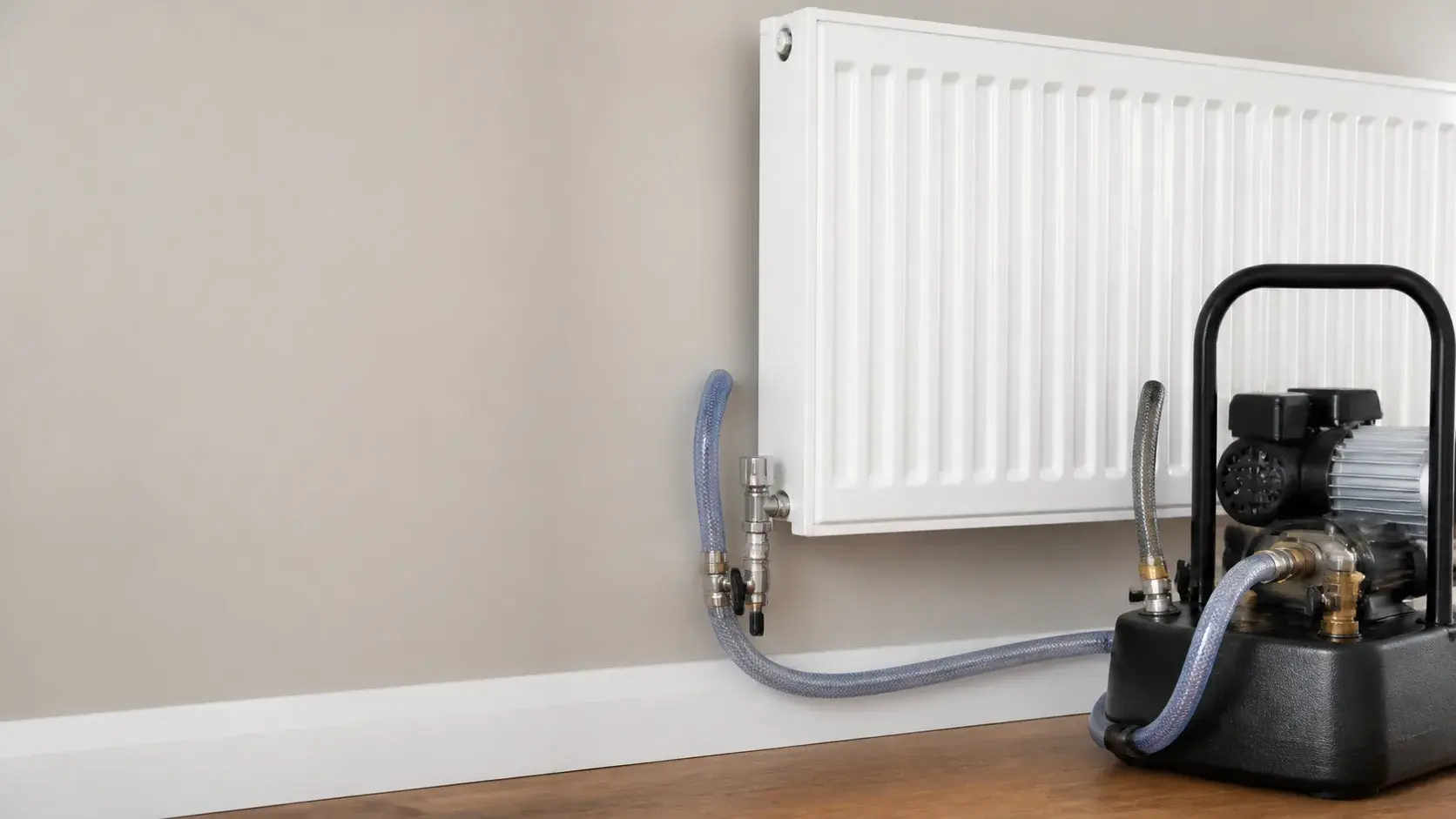
Do you need a chemical flush or a system flush?
Persistent cold spots deserve a diagnosis before you pay for cleaning. Ask the engineer what checks support their recommendation and whether the problem is confined to one radiator. If cleaning is appropriate, ask which method suits your system's condition, what the quote includes and how they will check the result. A flush should address an identified problem rather than be an automatic October maintenance purchase.
Check the service date before winter
A heating test is separate from a boiler service. Gas Safe Register recommends annual maintenance of gas appliances by a suitably qualified Gas Safe registered engineer. Check your service record and the manufacturer's requirements; if a service is due, arrange it rather than relying on the fact that the radiators get hot. Never remove the boiler casing or attempt gas repairs yourself.
Book help with an October heating problem
For homes in Bushey, Watford, Borehamwood and our London and Hertfordshire service areas, contact Gaswork Solutions with your boiler model, any fault code and a note of which radiators stay cold. We can discuss the next step and arrange an assessment. Use the booking button on this page or read the guides below if you want more background first.
